
Written by the McBride Health editorial team · Updated November 28, 2026 · Facts checked against the NIH Office of Dietary Supplements, the CDC, and the American Gastroenterological Association
Key takeaways
- Iron deficiency builds in stages. Your stores fall first, then your red cells shrink, and only later does hemoglobin drop. A normal complete blood count can miss the early stages.
- Tiredness, breathlessness on stairs, cold hands, and hair shedding are common signs. They’re also easy to blame on work or sleep, which is why the diagnosis gets delayed.
- Ferritin is the best single test of stored iron, but it rises with inflammation. A result in the normal range doesn’t always rule deficiency out.
- Iron from meat, poultry, and fish is absorbed better than iron from plants. Vitamin C helps, and tea or coffee with a meal works against you.
- In men and in women past menopause, iron deficiency needs a search for bleeding in the gut. Don’t treat it with pills and stop there.
Why iron deficiency slips past people
Iron deficiency is the most common nutrient shortfall in the world. WHO estimates that anemia affects roughly a third of the global population, and iron deficiency is its leading cause. In the US it shows up most in menstruating women, young children, and people with chronic illness.
Part of the problem is how it develops. Your body runs on stored iron, and those stores can empty long before your hemoglobin moves. At that point a standard blood count still looks fine. You feel off, your doctor sees a normal report, and everyone moves on.
The other problem is the symptoms. Tired. Foggy. Winded on the stairs. Those are also what a hard month at work feels like. Nobody books an appointment for that.
Heavy periods are the classic missed cause. If you soak through a pad or tampon every hour or two, or bleed longer than seven days, say so out loud. Many people assume their flow is normal because it’s their normal.
Symptoms that build slowly
Fatigue that sleep doesn’t fix is the headline. But iron does more than carry oxygen, so the signs spread out. Shortness of breath with mild exertion. Cold hands and feet. Pale skin, and paler inner eyelids if you pull the lower lid down.
Look at your nails. Spoon-shaped nails with a dip in the middle are a classic sign, though they take years to appear. Hair shedding is another. So are headaches, dizziness on standing, and restless legs at night.
Some people crave ice, or starch, or dirt. That’s called pica, and it’s a real symptom, not a habit to be embarrassed about. Chewing ice constantly is worth a mention at your next visit.
In older adults the picture can look different. Fatigue, confusion, or a heart condition that suddenly gets worse may be the only clues. Anemia puts stress on the heart, so existing heart failure often flares first.
What the blood tests show
A complete blood count tells you about hemoglobin, hematocrit, and red cell size. Small, pale red cells, reported as low MCV and low MCH, point to iron deficiency that has been around a while. But a normal MCV doesn’t clear you.
Ferritin measures stored iron and is the most useful single number. The catch: it’s an acute phase protein, so infection or inflammation pushes it up and can mask a real deficiency. The WHO uses a cutoff under 15 ng/mL for depleted stores. Many clinicians act on anything under 30.
Transferrin saturation shows how much of your iron-carrying capacity is in use. Under about 20% suggests the supply is short. Serum iron and total iron binding capacity are cheaper, but they swing during the day, so a single reading can mislead.
| Test | What it reflects | How to read it |
|---|---|---|
| Hemoglobin | Oxygen-carrying capacity | Low means anemia, but only after stores have been low for a while |
| Ferritin | Stored iron | Low is strong evidence of deficiency; a normal value doesn’t fully exclude it when inflammation is present |
| Transferrin saturation | Share of iron carriers that are loaded | Under about 20% points toward an insufficient supply |
| MCV | Average red cell size | Low means small cells, typical of long-standing iron deficiency |
| Soluble transferrin receptor | Receptor shedding from iron-hungry cells | Less affected by inflammation than ferritin |
Food, absorption, and the tea problem
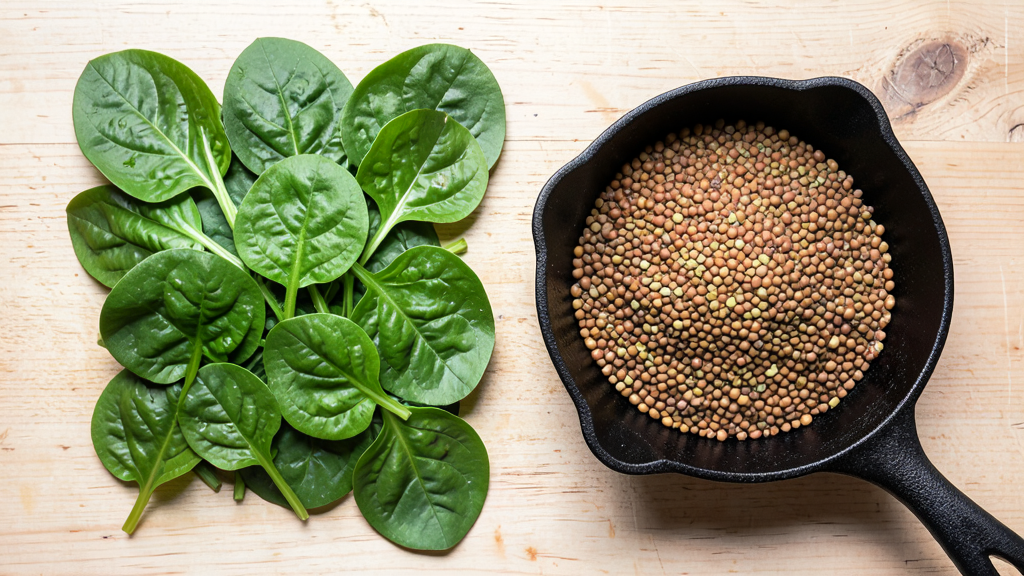
Iron in food comes in two forms. Heme iron, from meat, poultry, and fish, is absorbed efficiently. Non-heme iron, from beans, lentils, tofu, spinach, and fortified cereal, is absorbed at a much lower rate. That doesn’t make plant iron useless. It means the company it keeps matters.
Vitamin C is the best booster. Lemon on lentils, peppers with beans, or orange juice with breakfast can raise absorption a lot. Tea and coffee are the opposite. The polyphenols in a strong cup bind iron, and drinking it with a meal can cut absorption by half. Put them between meals instead.
Calcium supplements do something similar. So do phytates in whole grains and legumes, though soaking, sprouting, and fermenting reduce them. Cooking in a cast iron pan adds a small amount of iron to acidic foods like tomato sauce.
- Pair plant iron with a vitamin C source at the same meal. Peppers, citrus, tomatoes, broccoli.
- Keep tea, coffee, and calcium supplements at least an hour away from your main iron meal.
- Eat heme iron a few times a week if you eat meat. Beef, chicken thigh, sardines, and oysters all count.
- Add beans or lentils to one meal a day. A half cup of cooked lentils is a solid contributor.
- Check whether your cereal is fortified. The label will list a percentage of daily value for iron.
- Don’t self-prescribe iron pills. Excess iron is harmful for people with hemochromatosis, and pills interact with several common medicines.
When to See a Doctor
Some signs need care right away. Black, tarry stools. Blood in the stool. Vomiting blood or what looks like coffee grounds. Chest pain, fainting, a racing heartbeat, or breathlessness at rest. Call your doctor or go to urgent care the same day.
Book an appointment soon for unexplained weight loss, trouble swallowing, a new change in bowel habits, or fatigue that has lasted more than a few weeks. Those deserve a proper look, not another month of waiting.
There’s a rule that matters here. In men and in women past menopause, iron deficiency is a reason to check the gut for bleeding until proven otherwise, because colon cancer and ulcers can present this way. The American Gastroenterological Association has published guidance on this. If your doctor only hands you a supplement, ask about the plan for finding the cause.
Don’t stop or change any prescribed medicine on your own, and don’t take iron for months without a recheck. Your doctor will decide on the form, the schedule, and how long to continue.
What treatment looks like
Most people start with oral iron. Many clinicians now suggest every other day, since a large daily dose can raise a hormone that blocks absorption the next day. Constipation, nausea, and dark stools are common, and the dark color is expected.
Rechecking matters. Ferritin usually needs a few months to climb, and treatment typically continues for a few months after hemoglobin normalizes so stores actually refill. If pills aren’t tolerated or absorption is poor, intravenous iron is an option in some cases.
And the cause still needs an answer. Heavy periods, gut bleeding, celiac disease, and low intake all call for different next steps. Iron without that conversation is a patch, not a plan.
Sources
- National Institutes of Health, Office of Dietary Supplements. Iron Fact Sheet for Health Professionals. https://ods.od.nih.gov/factsheets/Iron-HealthProfessional/
- World Health Organization. Haemoglobin Concentrations for the Diagnosis of Anaemia and Assessment of Severity. Vitamin and Mineral Nutrition Information System. Geneva: WHO; 2011.
- Centers for Disease Control and Prevention. Recommendations to Prevent and Control Iron Deficiency in the United States. MMWR. 1998;47(RR-3):1-29.
- Snook J, Bhala N, Beales ILP, et al. British Society of Gastroenterology Guidelines for the Management of Iron Deficiency Anaemia in Adults. Gut. 2021;70(11):2030-2051.
- Ko CW, Siddique SM, Patel A, et al. AGA Clinical Practice Guidelines on the Gastrointestinal Evaluation of Iron Deficiency Anemia. Gastroenterology. 2020;159(3):1085-1094.
- MedlinePlus, US National Library of Medicine. Iron Deficiency Anemia. https://medlineplus.gov/irondeficiencyanemia.html
This article is for general information and is not medical advice… It doesn’t replace a visit with a clinician who knows your history and lab results. Talk with your doctor before starting iron or changing any treatment.
Related reading: More evidence-based guides to common health conditions